Landlord-Tenant/Co-Tenant Disputes
STAYING OR NOT, YOU ARE PAYING!
A rental dispute escalates over defects and conflict, but mediation encourages compromise, leading to a fair, win-win resolution through mutual understanding and flexibility.
Sometimes you may think that you have got it all covered when things are stated in black-and white. However, whatever deal you have reached with another party, even when put down in writing, can easily fall apart when anything goes wrong in your relationship.
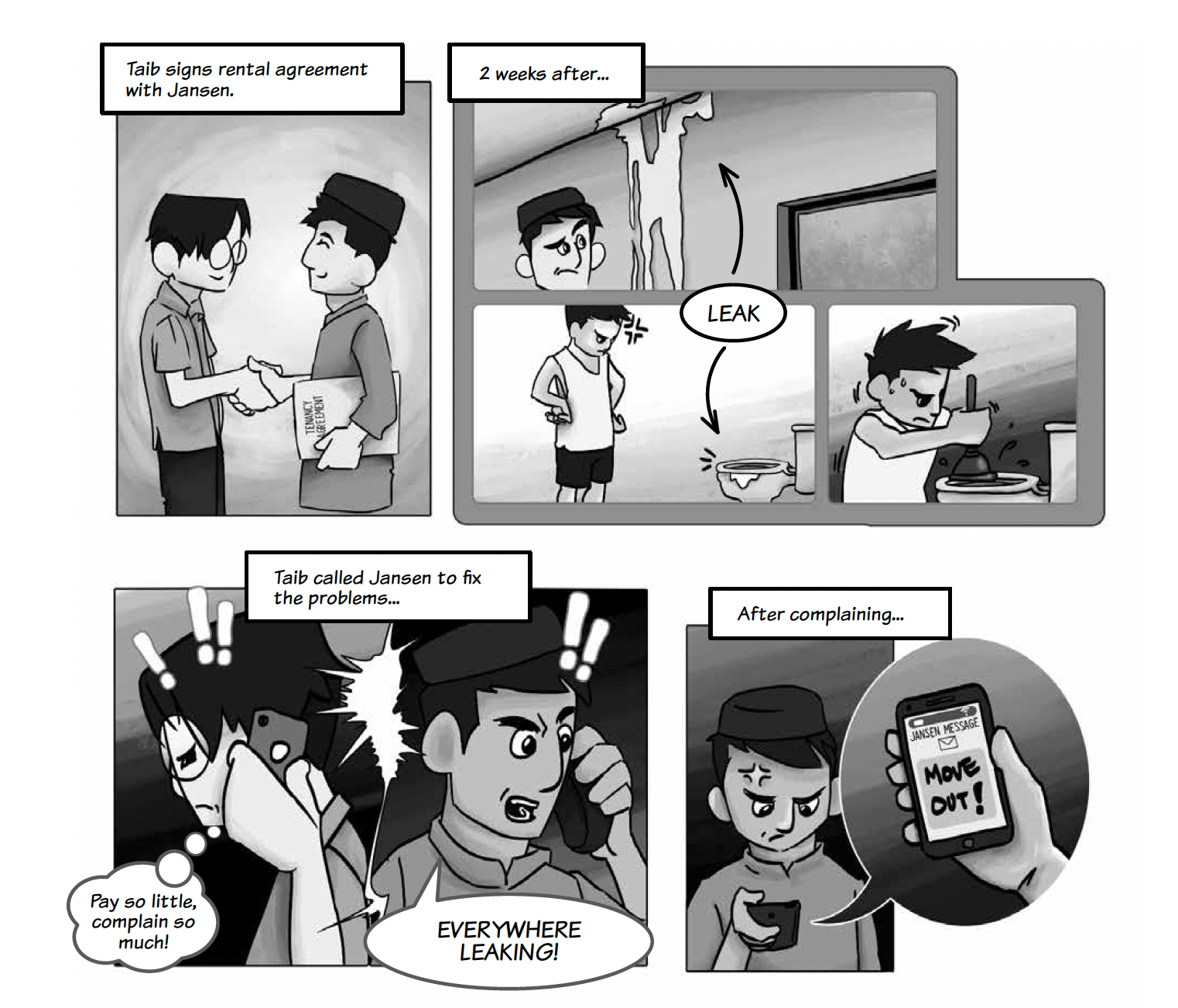
When Mohammad Taib first put his signature on a rental agreement with his landlord Jansen, little did he know of the trouble that was soon to follow. Barely two weeks after moving into the house, water started seeping in when it rained, and one of the two toilets went out of order. Finding such conditions unacceptable, Taib called Jansen up, demanding that those problems be fixed or he would terminate the tenancy immediately. Instead of an apology from him, Taib received a text message laced with vulgarities from Jansen, in which he also demanded that Taib move out immediately and without getting a refund on his one-month rental deposit.
When the mediator was called in to help with the case, it was obvious that the relationship between the two had become very strained. Neither was willing to even talk to each other.
During the discussion, Jansen was made to understand that his demand for Taib to move out immediately could perhaps be unreasonable and even impossible for anyone to accept. Even if Jansen wanted Taib to move out, he would need some time to look for new accommodation. Taib, on the other hand, was also made to understand that the low rental rate offered to him by Jansen could be an indication that the house he had chosen to rent was not in perfect condition. As a tenant, he could perhaps had exercised more care when renting any property.
Both parties also recognised that a settlement for their dispute could be achieved much faster and more easily through mediation rather than the Courts, which would no doubt be a long drawn affair.
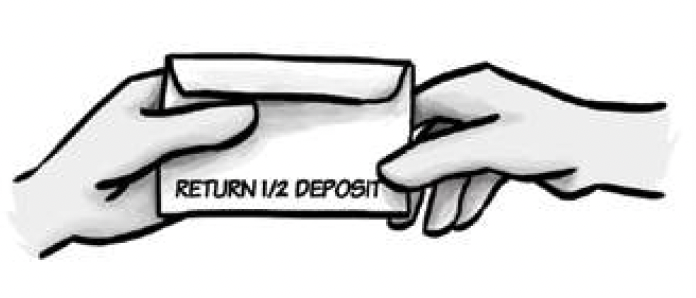
With the mediators’ help, both Taib and Jansen were able to arrive at a win-win outcome, where Jansen agreed to return half of Taib’s rental deposit and allow him to stay for another two weeks while looking for his new accommodation. Taib was also agreeable to pay Jansen rental for his additional two weeks of stay as he needed time to do his property hunting.
Whether an agreement is or is not stated in black-andwhite, adopting a give-and-take approach may help all parties involved to have a better chance at achieving a win-win outcome should a dispute ever arise.
[Names and other identifying details have been changed to protect the privacy of individuals whose stories are portrayed in this article.]